1. Define the task
Write down what you need the product to make easier. Be specific: a place for daily shoes, a clear work surface after hours, or a way to seat guests. This keeps comparisons grounded in your real routine rather than a list of features.
2. Measure destination and access
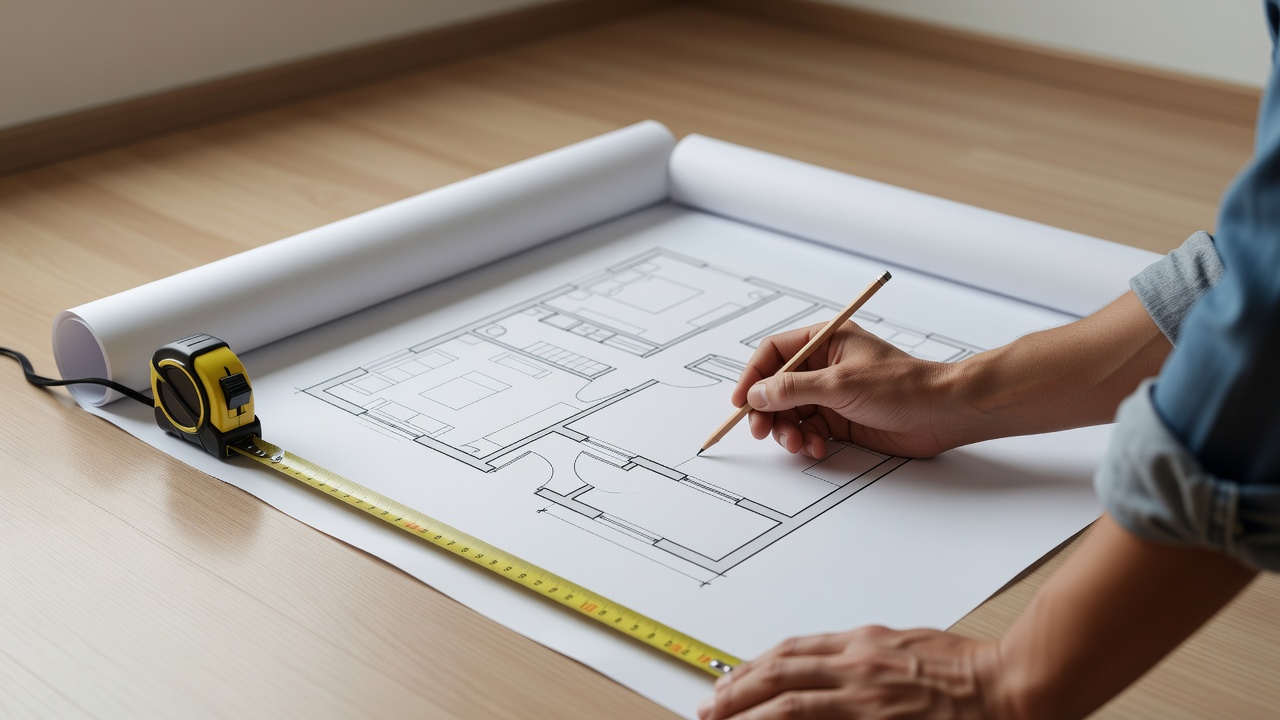
Record height, width and depth at the intended location. Include skirting boards, radiators, handles, pipes and sloping walls. Measure doorways, halls, lifts, stairs and tight turns along the delivery route. Check the packaged dimensions when available; the item itself may fit the room but not the way into it.
3. Draw the working footprint
Use removable tape or paper to mark the object’s footprint. Add space for doors, drawers, chair movement, lids and the person using it. Open nearby cabinets and walk through the room. For a folding or convertible item, mark both the stored and open positions.
4. Think through the everyday sequence
Imagine getting the product out, using it, cleaning it and putting it away. Is anything in the way? Is the routine easy enough to repeat on a busy day? For storage, check that commonly used items are reachable without unloading a stack. For appliances, follow manufacturer guidance on ventilation, heat, water and electrical use.
5. Compare care and construction
Read assembly, cleaning and maintenance instructions. Check stated load information and intended use. For wall-mounted storage, confirm mounting requirements, surface compatibility and any permission needed in a rental. Do not assume a fitting, adhesive or compact size is suitable for your particular wall or household.
6. Review the purchase details
Before checkout, understand delivery, assembly, returns and any packaging conditions. Keep the measurements and product details together so you can compare alternatives consistently. If you cannot find an important dimension, ask the seller or choose a product with clearer specifications.
Quick comparison table
| Check | Write down | Why it matters |
|---|---|---|
| Fit | Closed and working dimensions | Shows the real floor or counter area needed |
| Access | Doorway and route measurements | Reduces delivery and installation surprises |
| Routine | Setup, use, clean and put-away steps | Reveals whether the product is practical day to day |
| Trade-off | Space saved and convenience lost | Helps compare usefulness, not just features |
When an item passes the practical test—fitting the room, arriving safely and making a real task easier—it is much more likely to earn its place.