Protect your prep area
Measure the clear counter you need for your usual tasks before adding an appliance or organizer. A product’s outer dimensions do not show how much room it takes when a lid opens, a handle extends or ingredients are laid out beside it. Mark the full working area on the counter and try your normal preparation routine around that outline.
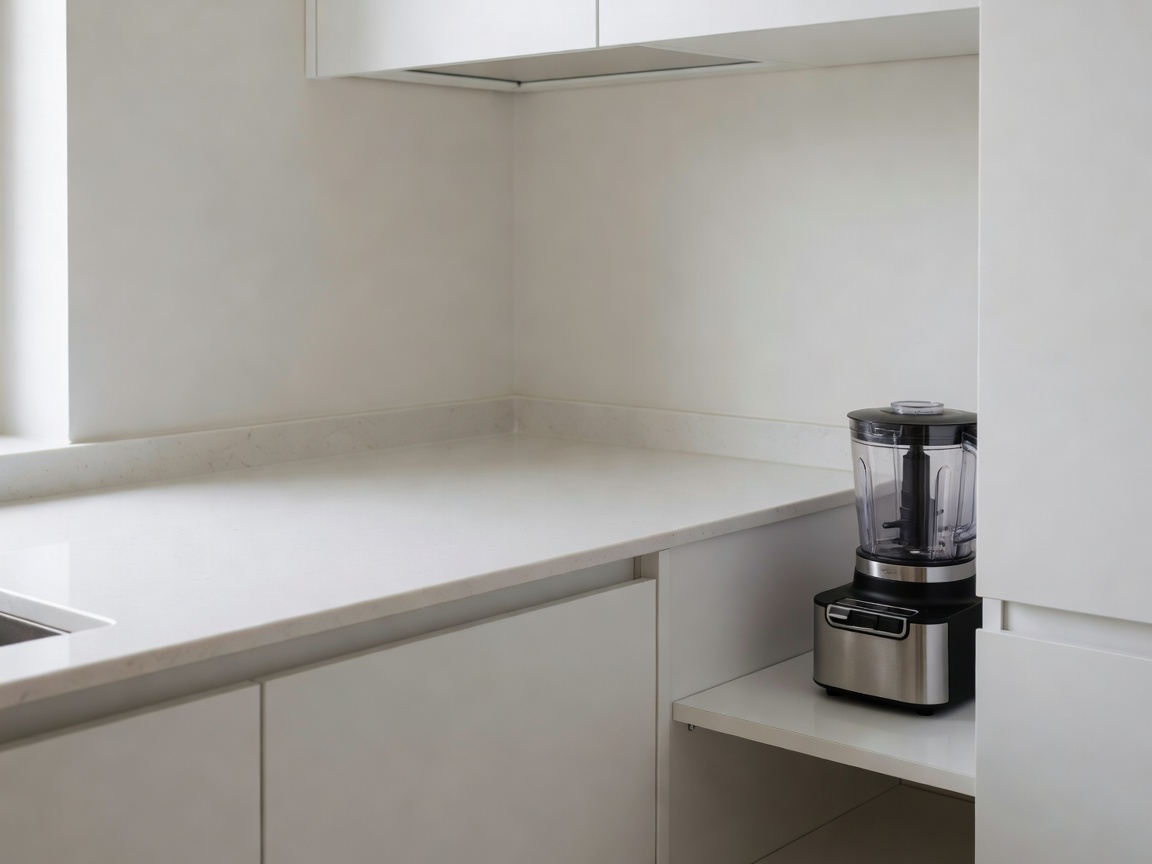
Check whether the appliance can sit safely where you plan to use it. Follow the manufacturer’s instructions for ventilation, heat, water and electrical access. Do not assume that a compact footprint makes an appliance suitable for every shelf or cabinet.
Match tools to meals you actually make
Small kitchens can collect specialized gadgets that each solve one occasional task. Before buying, name the routine it would improve and how often that routine happens. A compact scale or nesting measuring set may be useful if you cook regularly; a novelty tool may occupy valuable space after a few uses.
Multi-use tools can be helpful when they perform their main jobs well and can be cleaned without fuss. Look at parts that detach, dishwasher guidance, replacement availability and how the tool dries. A device that is annoying to clean is less likely to be used, even if it combines several functions.
Think about the storage location
Measure the cabinet opening and interior shelf, not just the empty corner where you hope to put something. Account for handles, hinges, pipes and the height needed to lift the item out. If a tool is used every day, keeping it behind several stacked objects may make the compact arrangement impractical.
Wall rails, magnetic holders and over-door organizers can free a drawer, but only if the mounting method suits the surface and the stored items remain secure. Check permitted load, installation instructions and whether a rental agreement limits drilling or adhesive fittings. Keep heavy or frequently used items reachable.
Make cleanup part of the comparison
Consider splashes, crumbs and water around the product. Smooth surfaces and accessible corners can make cleaning easier, while complicated joints may hold residue. Look for clear care guidance and assess whether any detachable pieces can be handled safely. Keep products away from cooking heat or water sources unless their instructions say the location is appropriate.
Keep the kitchen flexible
A good small-kitchen purchase returns more value than it occupies: a task becomes easier, a surface stays clearer or storage becomes simpler to reach. If it only adds another object to move each time you cook, reconsider the fit. Compare the footprint, setup, cleaning and put-away routine before making room for it.