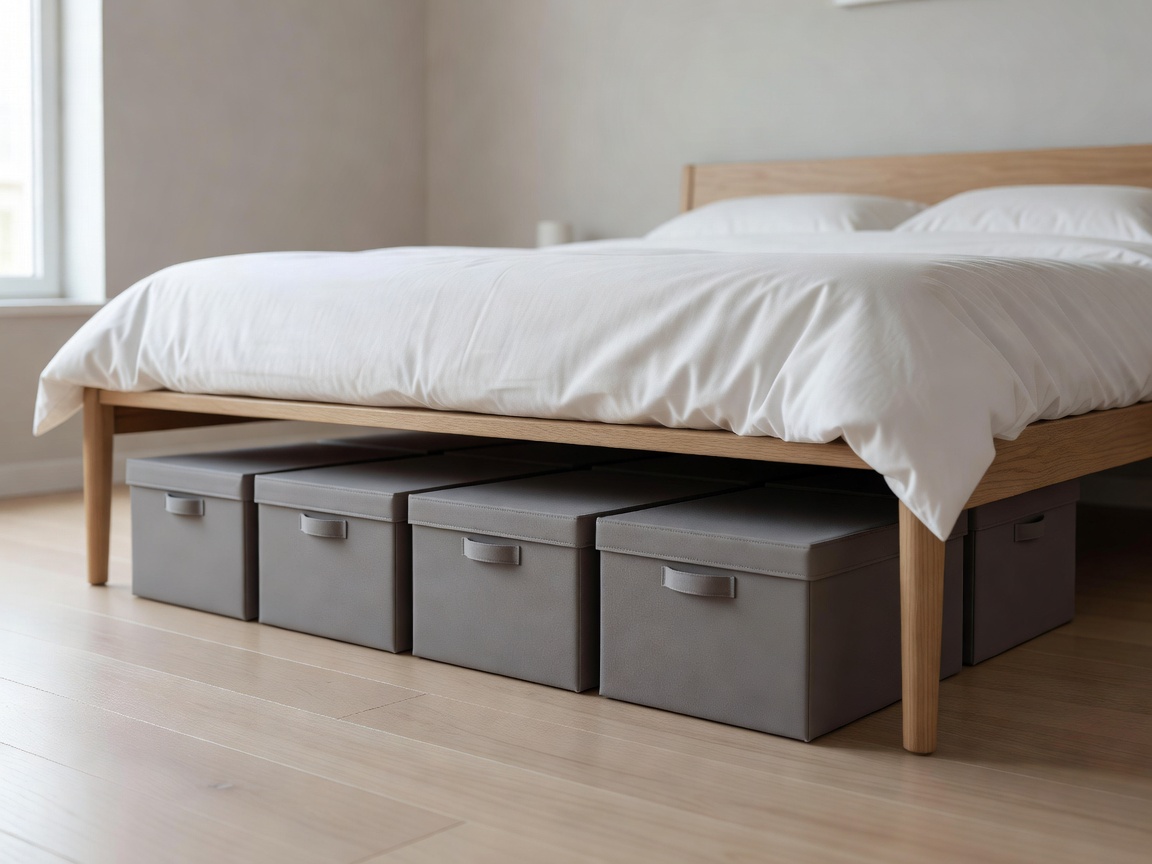
Start with what needs a home
Choose a category before choosing a container: spare bedding, everyday shoes, cleaning supplies or hobby materials. Grouping similar items makes it easier to estimate volume and decide how often you need access. It also helps avoid buying organizers that create new storage for things you do not use.
Measure the available space at its narrowest point, including trim, furniture legs, pipes and handles. For under-bed storage, check the lowest clearance and leave enough room to pull the container out. A drawer that barely fits can be difficult to use once the bed is made or the room is busy.
Use vertical space carefully
Shelves and wall-mounted rails can free floor area, but placement matters. Keep frequently used objects within comfortable reach and avoid placing heavy items overhead. Check the wall type, fixing method and load instructions, and ask permission before drilling in a rental. Removable products still need to suit the surface and be used within their stated limits.
Over-door pockets, hooks and hanging organizers can make small spaces more functional. Before buying, measure door thickness, hinge clearance and the space between the open door and nearby furniture. Make sure the added depth will not block a hallway or prevent the door from opening fully.
Choose visibility over mystery
Transparent boxes, labels and open baskets can help you find stored items, but the best option depends on the contents and location. Lidded containers protect items from dust; open bins make frequent access quicker. A stack can use height efficiently, but only if you can reach the lower container without emptying everything above it.
Consider the weight of a full container. A large box that is easy to slide empty may be awkward or unsafe to lift when packed. Smaller containers can be easier to handle and sort. Check product handles and edges for comfort, and follow any load recommendations provided by the maker.
Keep a clear-out routine
Storage should support the room, not become a reason to keep everything. Leave some capacity unfilled so items can be returned without force. Review a storage zone when it becomes difficult to close, retrieve or put things away. If a system requires constant rearranging, simplify it or move the category closer to where it is used.
Test the arrangement before buying
Use a box you already own or mark dimensions with paper to test how the proposed organizer affects the room. Open nearby drawers and doors, walk the route and take out an example item. A storage solution earns its place when it protects the room’s movement and makes a regular task easier.