Start with the path through the room
Before comparing styles, note the route you use most: from the entrance to the sofa, from bed to wardrobe, or from desk to the door. A furniture plan that blocks this path may save a few inches on paper while making the room feel difficult to use. Measure the clear walking space you want to preserve and mark proposed furniture edges with painter’s tape or sheets of paper.
For a sofa, include the depth of cushions and the space needed to sit down. For a table, consider chair pull-out and whether people can pass behind someone seated. For a desk, measure the chair when pulled back, not just the tabletop. These practical checks turn a floor plan into a test of daily movement.
Choose the right kind of flexibility
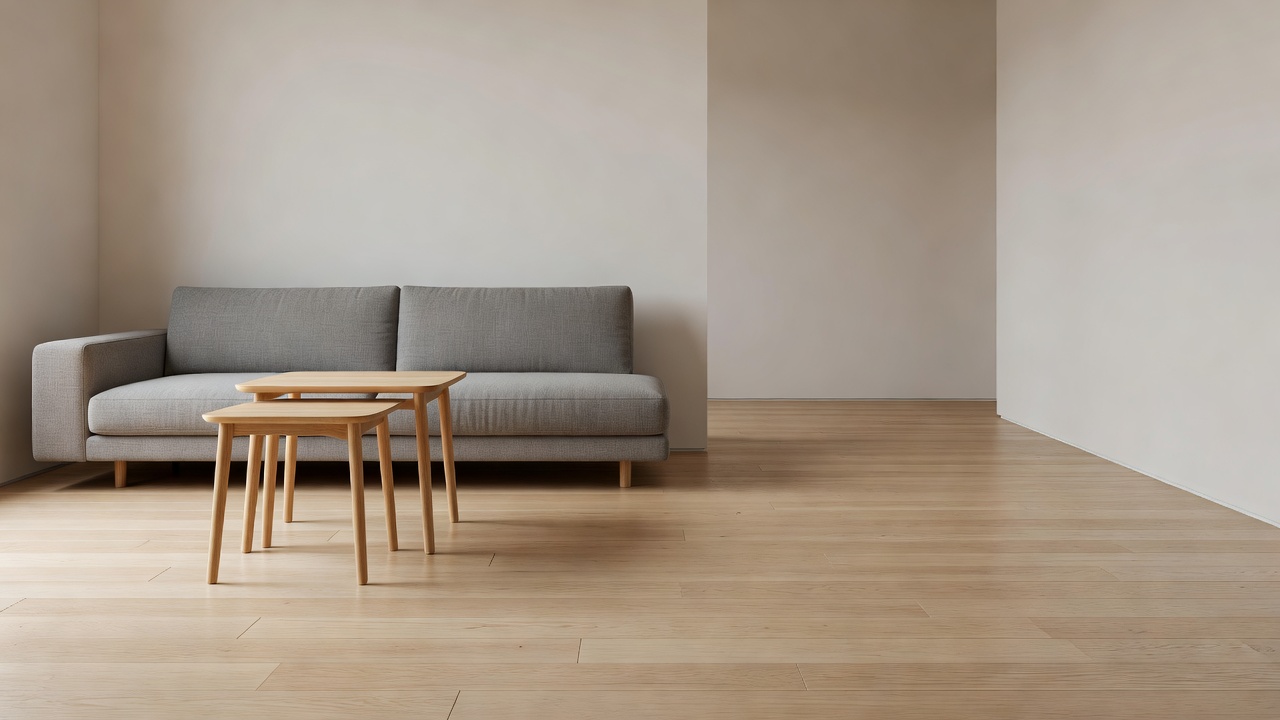
Nesting tables, folding desks, drop-leaf dining tables and stackable chairs can help rooms change roles. Their usefulness depends on setup effort. If a table must be cleared, unfolded and moved every time you eat, ask whether that routine fits your household. A simple fixed-size table that suits both meals and work may be more convenient than a complicated transformable design.
Measure both the stored position and the open position. Check where loose parts go, how much force a hinge needs and whether the item can be operated without shifting other furniture. For convertible seating or guest beds, look at the sleeping surface and the clearance needed to open it, not only the daytime silhouette.
Comfort still matters
Small furniture should support the task it is meant to serve. For a chair, look at seat height, depth and back support. For a desk, consider leg room and working height. For a bed, keep enough room to make it and reach storage without squeezing past sharp corners. Use product measurements as a starting point, then compare them with furniture you already find comfortable.
Materials, delivery and assembly
Check the product’s stated load limits, cleaning guidance, assembly steps and delivery dimensions. A large flat-pack may be manageable if components fit through the route; a preassembled piece may not. Check return conditions and packaging requirements before ordering. Where the furniture will be used daily, sturdy construction and repairable parts can matter more than a compact-looking feature.
A simple comparison note
Write down the item’s working footprint, clearance requirements, storage position, comfort details and setup routine. Compare alternatives using the same notes. If a product saves floor space but blocks access, makes cleaning awkward or is uncomfortable for its main task, the trade-off may not be worth it.